Lindsay Oesterritter
Citrus Juicer
$132.00
Sold out
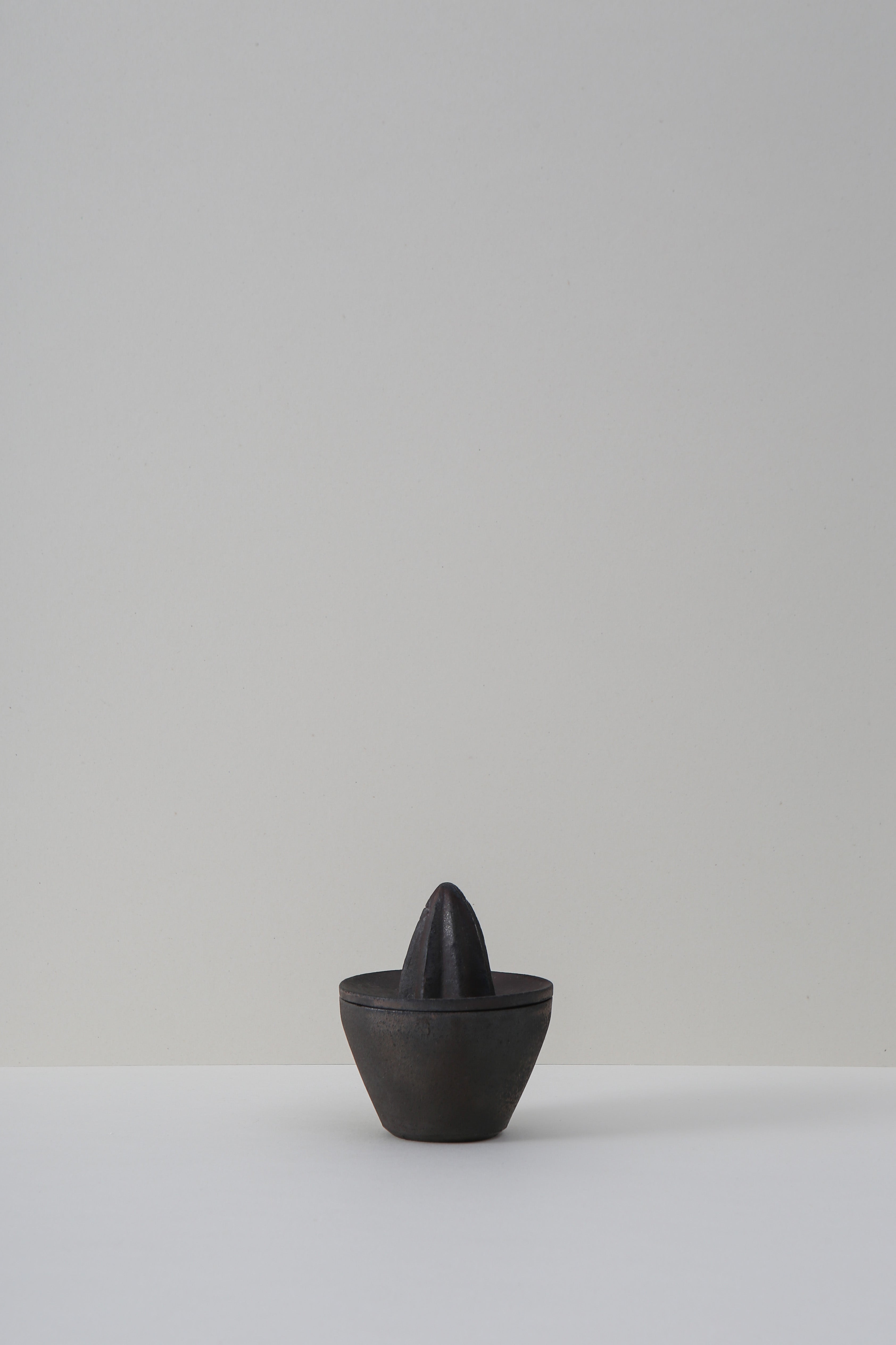
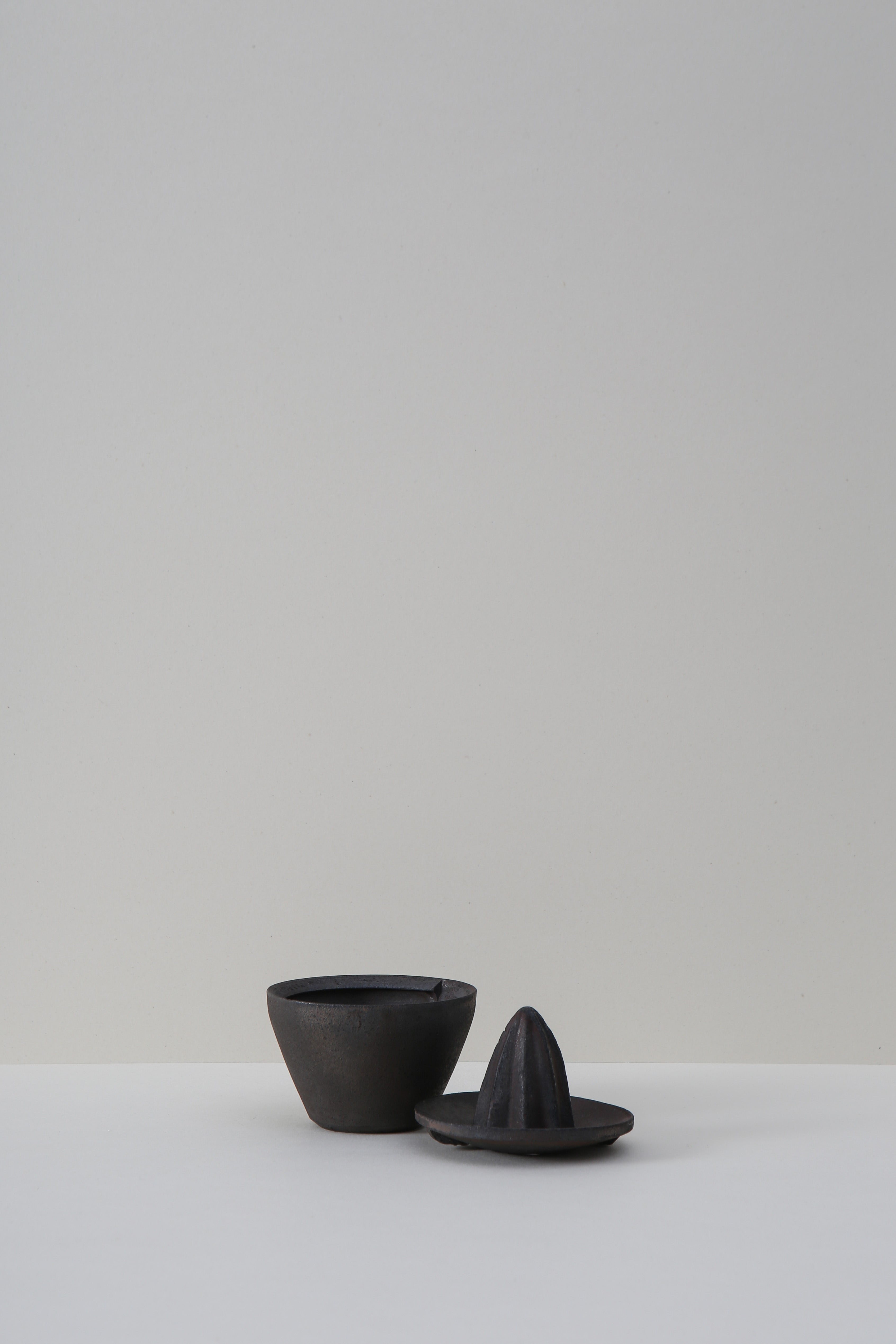
During our first trip to Japan, my husband was captivated by the use of individually sized juicers. Usually presented to us while ordering chūhai (abbreviated for shōchū highball) beverages in Izakayas, we loved the act of juicing our own citrus and determining how much was added to our drink. This wood-fired ceramic juicer is an ode to that memory. Simple to use, with a basin to collect juice and a pouring spout for ease, its size is perfect for a couple of cocktails and is small enough in scale to be stored easily in any kitchen, though beautiful enough to be left out as well.
Specifications
Materials: Stoneware Dimensions: 4.75" H x 4" D Origin: Virginia, United States
Artist Notes
Lindsay Oesterritter Inspired by the relationship between time, form, and surface, Lindsay Oesterritter's work conveys a beauty that is both robust and subtle. Working in an intentionally straightforward manner, Lindsay chooses the clay and processes to enhance the marks left on the vessel's surface, thereby revealing the material's true qualities. Though her simple stoneware pieces are made for everyday use, they feel and look like something special. Oesterritter's years of experience have led to the publication of her first book, 'Mastering Kilns and Firing,' in which she offers tips and techniques on raku, pit, barrel, and wood firing. She is also a co-founder and organizer of National Clay Week, as well as a member and co-founder of Objective Clay, an online organization dedicated to building and educating the ceramics community.
Care Instructions
Ceramic pieces can be unglazed, partially glazed, or fully glazed. Each application requires a slightly different approach to caring for the piece. While most ceramics are dishwasher-safe, we recommend handwashing to maximize the piece's longevity. It is best to wash after each use. Lukewarm water and a mild detergent will do, but for a hardier stain, you can use gentle cleansing products like Bon Ami. For woodfired work, if you regularly clean your piece with harsh soaps or in the dishwasher, it might start to look visibly dry. In this case, apply a small amount of mineral oil to your hands and rub the surface of the piece to regain its luster. The porosity of unglazed clay bodies can retain large amounts of moisture and harbor bacteria. Avoid soaking the piece in water for extended periods, as this can lead to discoloration, odor, and mold growth. Most hand-thrown ceramic wares are left with an unglazed foot. If rough to the touch, use 220-grit sandpaper to polish until smooth. Refrain from sliding the piece across surfaces to help avoid scratches on furniture. Wipe the piece with a soft cloth after washing, and dry on a dish rack overnight before storing.