Thylda Palmese x Emi Joyce
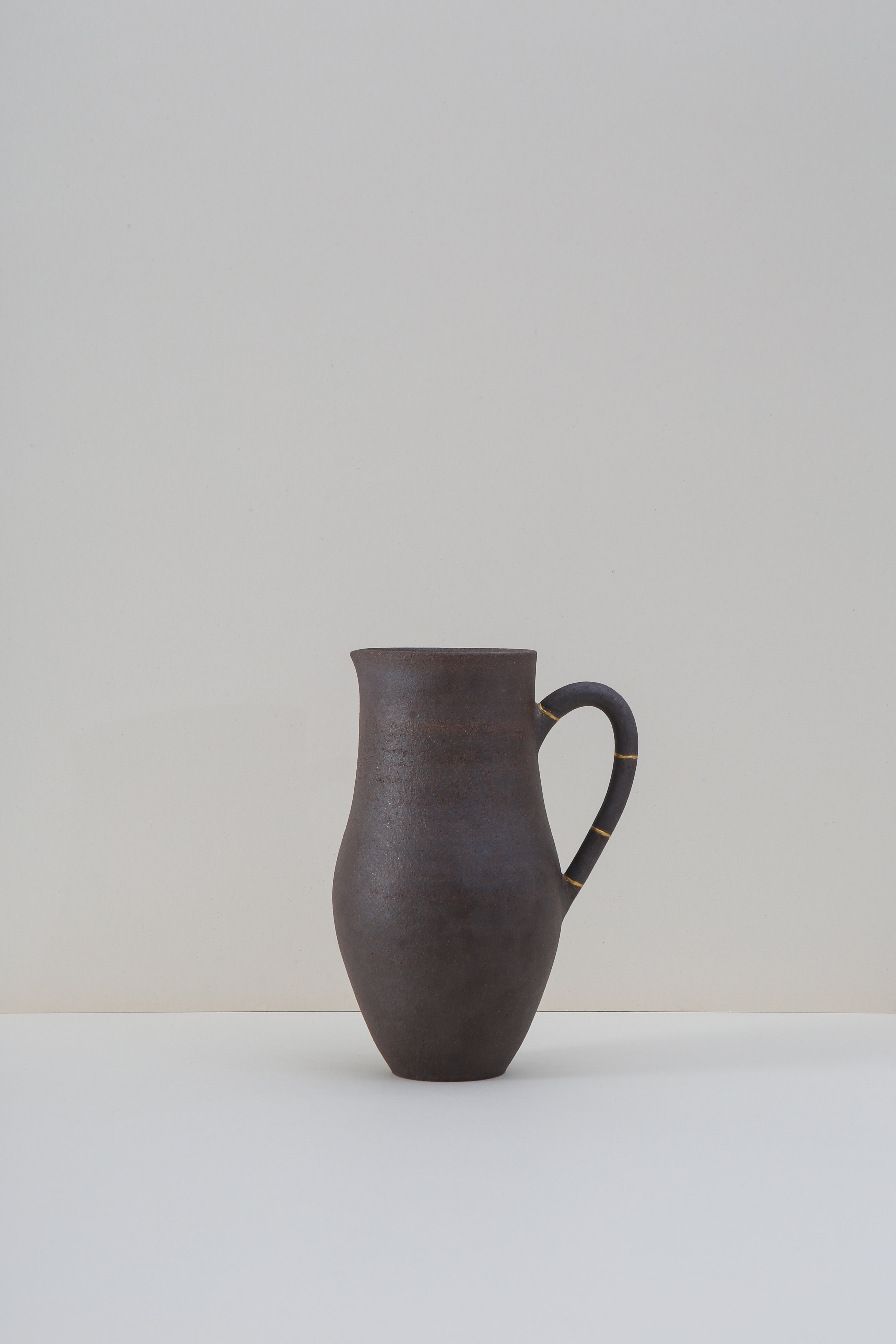
Stoneware Jug with Kintsugi Repair
$245.00
Sold out
This pitcher's simple and utilitarian qualities perfectly embody the ancient European stoneware. Featuring an easy-pour spout, a Kintsugi-repaired handle, and a raw stoneware surface, we envision this piece being used to display fresh flowers at a dinner party or adorning a simple shelf. We particularly love how the gold of the Kintsugi contrasts against the dark stoneware. Note: This piece was repaired using traditional Japanese Kintsugi methods, involving the application of urushi lacquer and real gold powder. Even though the repaired handle was reinforced internally with wooden dowels, we do not recommend holding this pitcher by the handle without additional support. Refer to our Product Care guide for tips on caring for your piece.
Specifications
Materials: Stoneware, urushi lacquer, gold powder Dimensions: 6" L (including handle) x 4.5" W x 9" H Origin: California, United States
Artist Notes
Thylda Palmese Reminiscent of 18th and 19th-century French stoneware, Thylda Palmese's work reveres antiquity, materiality, and the emotional weight they carry. Raised in Southern France, Palmese grew up in a home where objects had a story, instilling her belief that craft deeply resonates with memory and gesture and offers a means of paying attention. When viewing her work, you notice a dialogue between contrast and harmony, where quiet forms are met with raw textures and straddle the space between refinement and roughness. Now residing in San Francisco, Palmese splits her time between creating work in her small home studio and closely working with individuals living with dementia as a ceramics instructor, further teaching craft as a means of care and connection.
Care Instructions
Urushi lacquer is used as glue, filler, and a protective coating throughout the kintsugi repair process. Once cured, the lacquered surface is waterproof, food-safe, and can withstand both hot and cold liquids. Similar to traditional lacquerware, avoid soaking your piece in water for prolonged periods. Do not put the piece in the dishwasher, fridge, freezer, oven, or microwave. Though suitable for hot and cold foods, avoid immediate temperature shocks. For tableware or teaware, serve your food or beverage at a 'ready to eat/drink' temperature. Warming up your vessel with lukewarm water before serving will help reduce the chances of damage. To protect the lacquer and gold-dusted surface, avoid using metal utensils. Repaired pieces are more delicate than before, so we recommend using both hands to lift and move your piece with care. Holding the repaired areas with one hand can impose unnecessary stress on the original fracture. Wash your piece in lukewarm water, using only a small amount of mild detergent if necessary. Do not use metallic scrubbing pads. They will cause the gold powder and lacquer to scratch and eventually peel. Wipe dry with a soft cloth and allow it to dry thoroughly on a dish rack overnight before storing. When not in use, store the piece in a controlled climate away from direct sunlight.